
The defeat of proposed bans on commercial sealing and the international polar bear trade gives some welcome breathing space to Inuit and other Arctic hunting peoples—at least for now.

The defeat of proposed bans on commercial sealing and the international polar bear trade gives some welcome breathing space to Inuit and other Arctic hunting peoples—at least for now.
On Friday, April 5, I will be at the British Library in London to participate in the 38th annual conference of the British Association for Canadian Studies (BACS). This year’s conference theme is “Crediting Canada: Canada as an economic world leader?” and BACS has asked participants to explore the “triple-A” image that Canada has enjoyed …
I’m delighted to have been invited to Oxford on March 24 and 25 to participate in a workshop on sustainable development in the Arctic. My hosts will be the International Union for the Conservation of Nature (IUCN) and Royal Dutch Shell, who are collaborating on a project to develop cross-sector standards for industrial activity in …

A proposal to prohibit international commercial trade in polar bears would do little to protect an already well-protected animal further, but much to damage Inuit economic rights and interests.

The fiscal relationship between Ottawa and the three Northern territories will reach a crossroads in little more than a year, when the current federal-territorial fiscal arrangement—known as Territorial Formula Financing (TFF)—comes up for renewal. The territories depend profoundly upon TFF to fund their development, and Ottawa points to it as the principal financial contribution toward its vision of a North of self-reliant individuals, healthy communities and responsible governments. Yet it is unclear whether TFF even covers the extraordinary costs of providing public services in the territories, let alone the costs of realizing Ottawa’s vision. Nowhere is this less clear than in Nunavut, where experts have called into question the adequacy of federal support. Will Ottawa take the upcoming TFF renewal as an opportunity to dispel doubts that its aspirations for the North exceed its willingness to pay for them?
On Thursday, November 28, I’ll be at the School of Geography and the Environment at the University of Oxford, where I’ll make a guest appearance in the “Northlands: Peoples and Politics” undergraduate course convened by Dr Richard Powell and Professor Judy Pallot. Dr Powell plans to discuss the economic geography of the Arctic in the …
Next week I’ll be in Edinburgh, Scotland, leading a research seminar at the Centre for Canadian Studies in the School of Social and Political Science at the University of Edinburgh. My seminar is part of the Centre’s Autumn 2012 Open Research Seminar Series, and it will be based on my forthcoming Northern Public Affairs paper, …
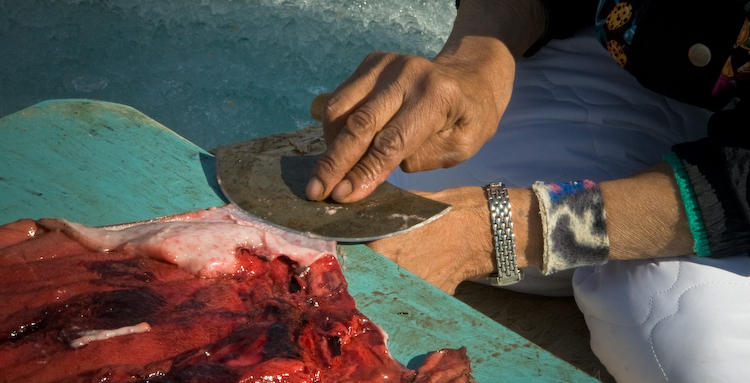
Northerners shouldn’t worry that Canada will abandon its challenge to the EU’s seal-trade ban in favour of a free-trade deal with the EU, but they should worry instead about the damage the ban has done to the very idea of Inuit as economic actors in the modern marketplace.
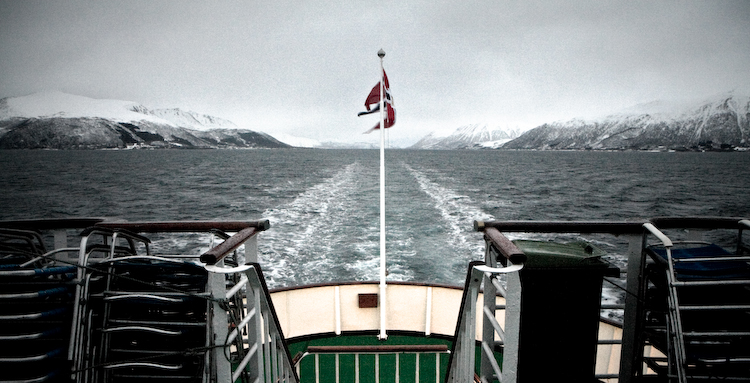
A recent letter from Greenpeace Canada only strengthens the impression that Greenpeace’s vision for the Arctic doesn’t include the states and peoples who already govern and occupy the region.
I’m very pleased to be participating next week in the 5th Polar Law Symposium in Rovaniemi, Finland, organized by the Polar Law Institute at the University of Akureyri and the Arctic Centre at the University of Lapland. I will be giving a short presentation in the afternoon of Thursday, September 6, based on my recent Policy …